7mm Wetsuit vs Drysuit for California Diving
The 7mm wetsuit vs drysuit question comes up for almost every diver who starts diving in California. Both will keep you warm enough to enjoy the kelp forests, but they work differently, cost very different amounts and suit different kinds of diving.
How each suit keeps you warm
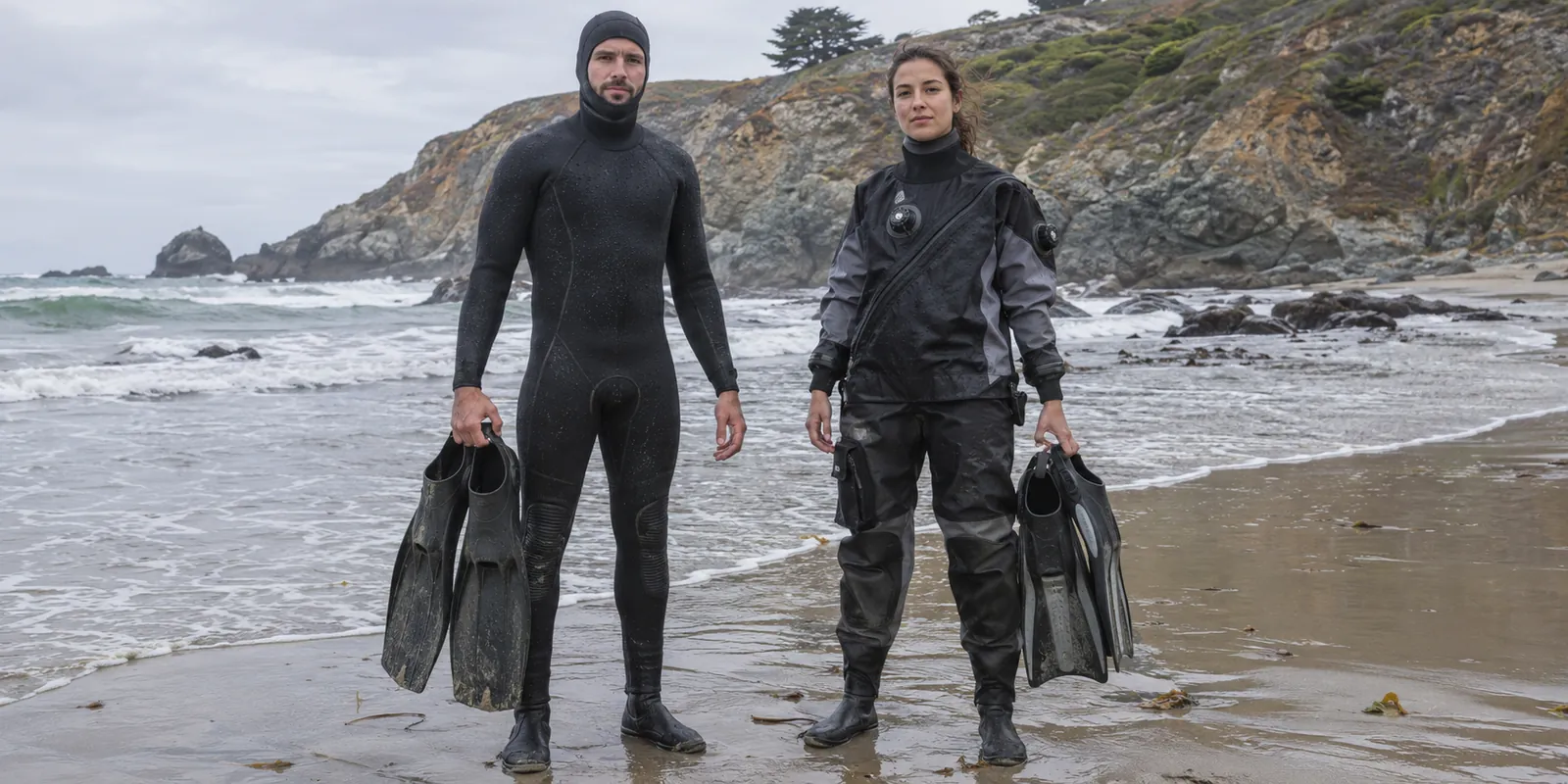
A 7 mm wetsuit traps a thin layer of water between the neoprene and your skin. Your body warms that water, and the thick neoprene slows heat loss. You still get wet, and the suit compresses with depth, so it insulates less at 80 feet than at the surface.
A drysuit keeps you dry. Seals at the neck and wrists keep water out, and warmth comes from the undergarment you wear inside. You add air to the suit as you descend to stop it squeezing, so the insulation stays the same at depth.
Cost
A good 7 mm wetsuit with hood, gloves and boots costs a fraction of a drysuit. A drysuit needs the suit, an undergarment, a low-pressure inflator hose, and usually different boots and gloves, and seals have to be replaced every few years. Renting is a good way to try a drysuit before you buy one.
Training
You can dive a wetsuit with the training you already have. A drysuit adds an air space you have to manage, so take a drysuit course or orientation dive before using one in open water. Most training agencies offer a drysuit specialty, and a local California dive shop can run it in a pool and from the beach.
Comfort
- Entering the water: the first rush of cold water into a wetsuit is a shock; a drysuit avoids it.
- Between dives: on a windy boat deck a wet suit gets cold fast. In a drysuit you stay dry and can add a jacket.
- Freedom of movement: a wetsuit is simpler and many divers find it easier for shore entries through surf. A drysuit can feel bulky until you get used to it.
- Weight: both need a lot of lead in the cold Pacific, and a drysuit with a thick undergarment usually needs more.
Which suit for which region
- San Diego, Orange County, Los Angeles and Catalina: a 7 mm wetsuit covers most of the year. A drysuit is a luxury, not a must, unless you dive often in winter or do long, deep dives.
- Channel Islands: a 7 mm wetsuit works for day trips to the eastern islands, especially in summer and fall. For multi-day boats and the outer islands, a drysuit makes four dives a day far more pleasant.
- Monterey, Big Sur and Northern California: the water is in the 50s or below most of the year, and most local divers use a drysuit. Visitors on a short trip often manage with a 7 mm wetsuit and a thick hood.
Check our California water temperature guide for typical temperatures by month.
Our take
If you dive a few times a year in Southern California, start with a well-fitting 7 mm wetsuit, hood, gloves and boots. If you dive often, dive the Central Coast or want to stay comfortable on long boat days, a drysuit is worth the cost and the training. Our scuba diving gear guide covers the rest of the kit.