California Lobster Diving: Season, License and Rules
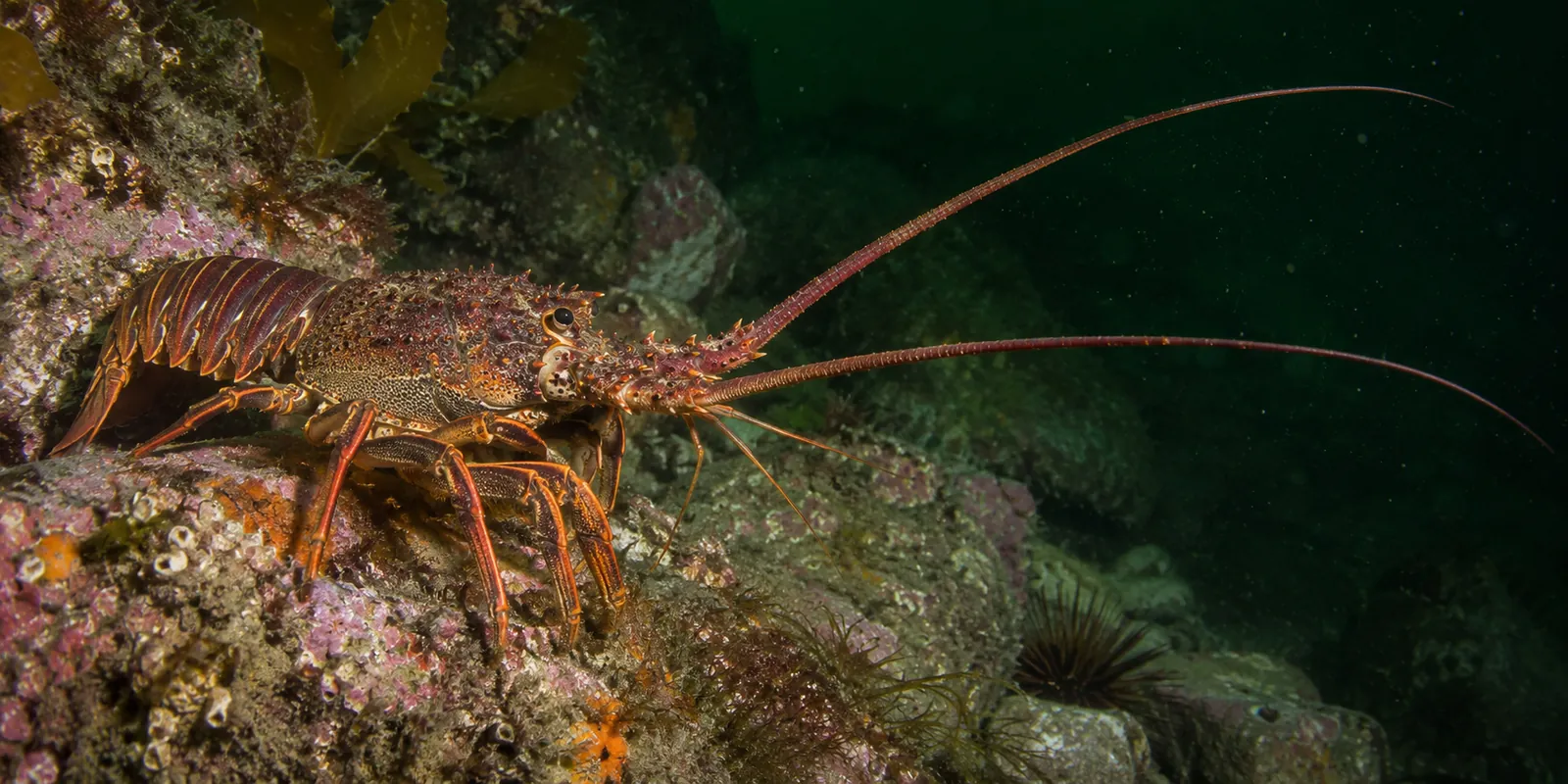
California lobster diving is a fall and winter tradition for Southern California divers. The California spiny lobster has no claws, hides in rocky cracks by day and comes out at night, and catching one by hand is a real skill. The rules are strict, though, so learn them before your first hunt. This summary is based on the California Department of Fish and Wildlife (CDFW) rules at the time of writing; always check the current regulations before you go.
Season dates
The recreational season opens at 6:00 p.m. on the Friday before the first Wednesday in October and closes at 11:59:59 p.m. on the first Wednesday after March 15. The exact dates change each year, so check the CDFW lobster page for this season's opener.
License and report card
- California sport fishing license: required for divers 16 and older.
- Spiny Lobster Report Card: required for anyone taking lobster, including children under 16. You record each trip and your catch on the card.
- Ocean Enhancement Validation: required for ocean fishing south of Point Arguello, unless you hold a one- or two-day license.
Report cards must be returned or reported online by April 30 after the season closes, even if you caught nothing. Missing the deadline can mean a non-return fee.
Size and bag limits
A lobster must measure at least 3 1/4 inches along the carapace, in a straight line from the rear edge of the eye socket to the rear edge of the body shell. Carry a lobster gauge and measure every lobster in the water. Undersized lobsters go back immediately, unharmed. The daily bag and possession limit is seven lobsters per person.
How divers may take lobster
Divers may take lobster with their hands only. Spears, hooks and tickle sticks are not allowed, and you cannot carry spearfishing gear to take lobster on the same dive. Wear gloves, approach slowly with a light, and grab the lobster by the body, not the antennae.
Where you cannot hunt
Lobster may not be taken in State Marine Reserves, and many State Marine Conservation Areas also ban it. Popular dive sites such as Casino Point and La Jolla are protected. Check the boundaries before every dive, using our guide to diving California's marine protected areas.
Gear and safety
Most lobster diving happens at night, often from a boat. Carry a primary and backup light, a lobster gauge, a catch bag and a surface marker. Our scuba diving gear guide for California divers lists the cold-water kit you will need, and our California dive travel guide covers the regions where lobster boats run.