California Marine Protected Areas: A Diving Guide
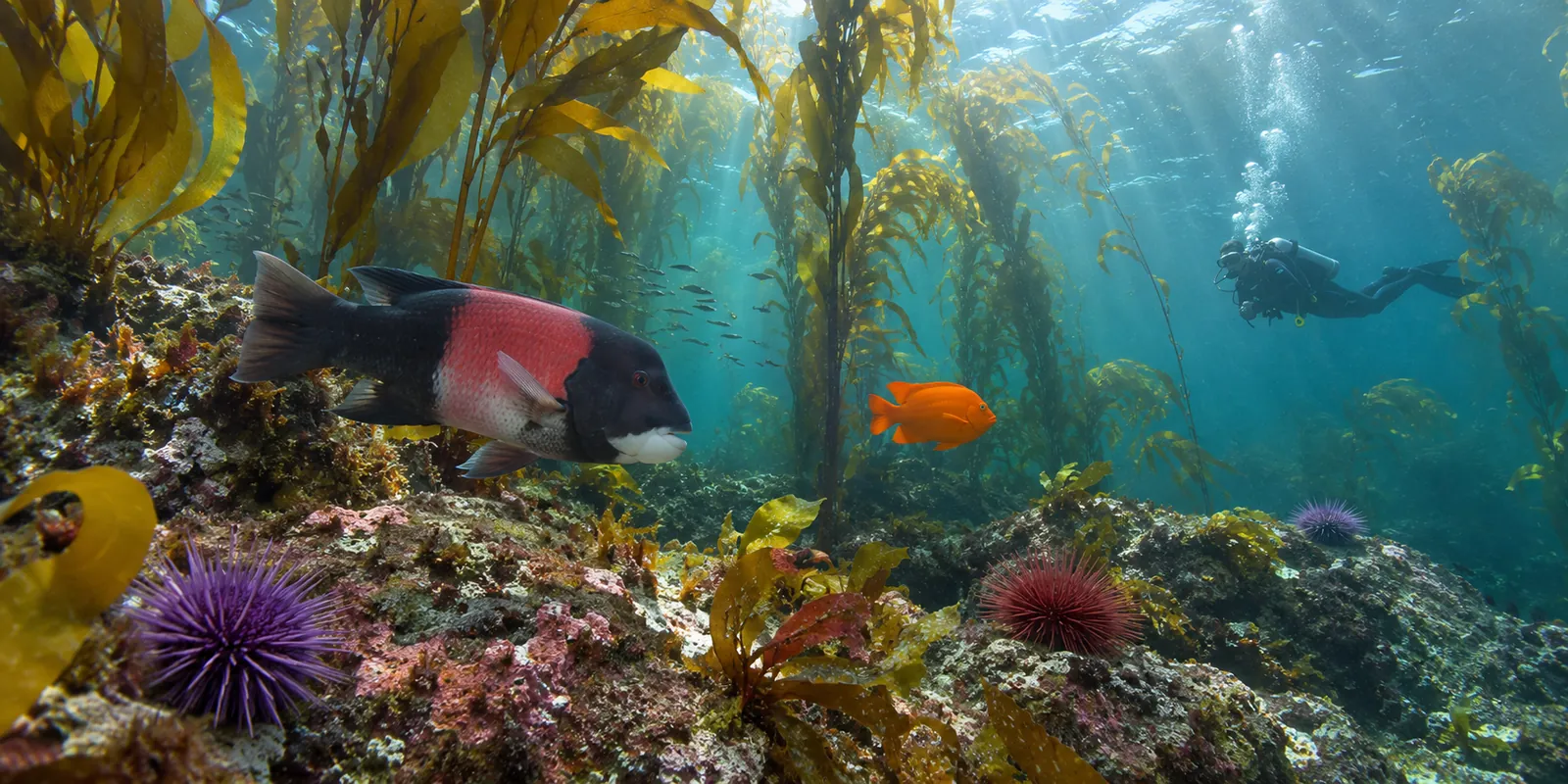
California marine protected areas diving shows you what the coast looks like when it is left alone: bigger fish, more of them, and reefs that have not been picked over. California has a statewide network of 124 marine protected areas (MPAs), created under the Marine Life Protection Act and completed in 2012. Many of the best dives in the state are inside one.
The main kinds of MPA
- State Marine Reserve (SMR): no take of any kind. You may not fish, hunt, collect shells, or damage or disturb any marine life or habitat. Diving, snorkeling and photography are allowed.
- State Marine Conservation Area (SMCA): some recreational or commercial take may be allowed, depending on the area. Each SMCA has its own list of what is allowed. Some, such as Casino Point, are no-take.
- State Marine Park and others: a few other designations exist, each with its own rules.
The rules apply to everyone in the area, divers included. Boundaries are marked on CDFW maps and often by GPS coordinates rather than visible markers, so check before you dive.
What you can and cannot take
In a marine reserve the answer is simple: nothing. That includes lobster, fish, abalone shells, sand dollars and rocks. In a conservation area, look up the specific rules for that area on the California Department of Fish and Wildlife website before you dive. If you are not sure, take only photos.
Some of the best MPA dives
- Casino Point, Catalina: a no-take dive park with stairs into the water and garibaldi everywhere.
- La Jolla Cove and Shores: part of the Matlahuayl State Marine Reserve, with kelp, a deep canyon and summer leopard sharks.
- Anacapa and the Channel Islands: several reserves around the islands, with dense kelp and big fish.
- Point Lobos: one of the oldest marine reserves in the country, with towering kelp at Whalers Cove.
- Lovers Point, Pacific Grove: a sheltered beach inside the Lovers Point to Julia Platt State Marine Reserve.
Diving responsibly in an MPA
- Keep good buoyancy and stay off the reef.
- Do not touch, feed or chase animals.
- Do not carry hunting gear in a reserve.
- Use mooring buoys where they exist instead of anchoring.
Plan your trip with our California dive travel guide, and ask a local California dive shop about the MPAs near the sites you plan to dive.