Channel Islands Diving: A First-Timer's Guide
Channel Islands diving is the classic California boat dive: dense kelp forests, curious sea lions and rocky reefs covered in color, all within a few hours' boat ride of Los Angeles and Santa Barbara. Five of the islands, Anacapa, Santa Cruz, Santa Rosa, San Miguel and Santa Barbara, make up Channel Islands National Park, and the waters around them hold some of the richest diving on the West Coast.
Which island for which diver
The islands sit where cold water from the north meets warmer water from the south, so conditions change a lot from east to west.
- Anacapa is the closest island to the mainland harbors of Ventura and Oxnard. Short boat rides, sheltered coves and shallow kelp make it a good first island. Parts of its north shore are marine reserves, so the fish life is rich and nothing may be taken.
- Santa Cruz is the largest island, with many sheltered coves, sea caves and kelp beds on its north side. Boats can usually find a calm spot, which makes it popular for day trips.
- Santa Barbara is small and far to the south. It is known for its sea lion colony and clear water, and it is usually reached on longer day trips or overnight boats.
- Santa Rosa and San Miguel are the outer islands. The water is colder, the swell bigger and the boat rides longer. They reward experienced divers with untouched reefs, big invertebrates and lots of marine mammals, but they are not first-dive territory.
Day boats or a liveaboard trip
Most divers start with a day boat. Boats leave mainland harbors early in the morning, make two or three dives and return in the afternoon. Day trips to Anacapa and Santa Cruz are the easiest to book and the best way to see whether you enjoy California boat diving.
Overnight and multi-day trips reach the outer islands and let you make four or more dives a day without the long ride home each night. You sleep in a bunk on board and eat in the galley. Ask about bunk space, gear storage, how many dives are planned and whether nitrox is available before you book. A good California dive shop can tell you which boats suit your experience level.
Cold water and conditions
Channel Islands water is cold for much of the year: often in the mid 50s to low 60s Fahrenheit, warmer in late summer near the southern and eastern islands, and colder around San Miguel and Santa Rosa. Most divers wear a 7 mm wetsuit with a hood and gloves, or a drysuit. Our post on 7mm wetsuits vs drysuits in California helps you choose.
Expect some swell and surge, especially in winter and spring. Visibility varies from a few feet after a plankton bloom to 60 feet or more on a good day. Dive within your training, follow the crew's briefing and carry a surface marker buoy, since boats may pick you up away from the anchor line.
Marine life to look for
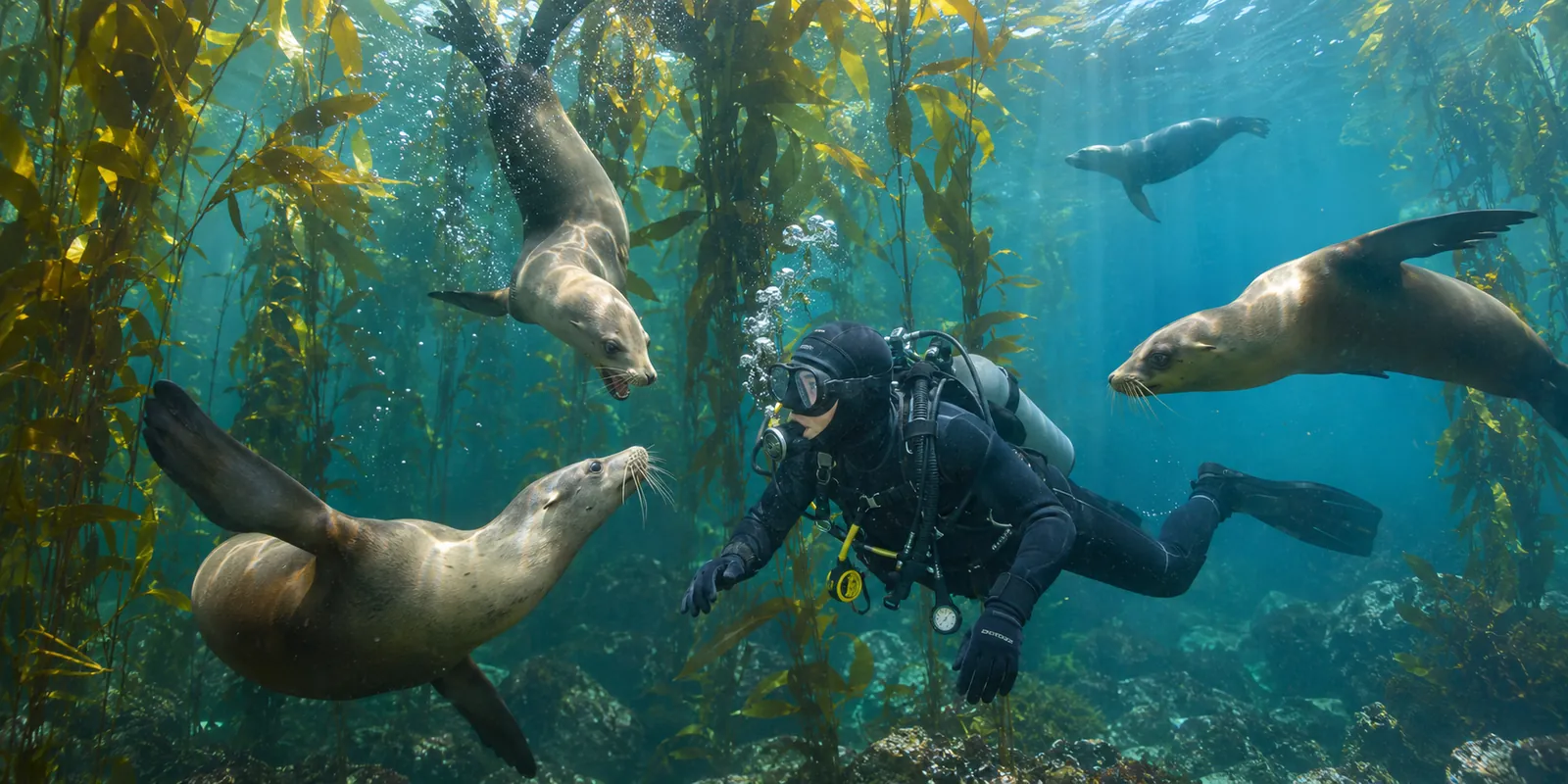
Garibaldi, sheephead, kelp bass and señorita fish fill the kelp. Sea lions and harbor seals often zoom in to play with divers in the shallows. The walls and reefs are covered in anemones, nudibranchs, sea stars and sponges, and in the right season you may see giant black sea bass, which are protected and must never be taken.
Rules to know
Several areas around the islands are marine reserves or conservation areas with their own rules. If you plan to hunt lobster or fish, check the boundaries before every dive. Our guide to diving California's marine protected areas explains what the different kinds of areas mean.
Planning your trip
Book your boat first, then plan where to stay near the harbor the night before an early departure. Our California dive travel guide covers the main regions and how to fit the islands into a longer trip.