La Jolla Diving: La Jolla Cove and La Jolla Shores
La Jolla diving brings together two very different shore dives a short walk apart. La Jolla Cove is a rocky pocket beach with kelp and reef, while La Jolla Shores is a long, gentle sandy beach that slopes toward a deep underwater canyon. Both lie in protected waters and both are among the most-dived sites in Southern California.
La Jolla Shores
La Jolla Shores is the training beach for much of San Diego. The sand slopes gently, there is a large parking area near Kellogg Park, and on a small-surf day the entry is easy. Swim out over the sand and you reach the edge of the La Jolla Canyon, where the bottom drops away and you can see squid, rays, angel sharks, octopus and, at night, a busy community of invertebrates.
Even small waves can knock down a diver carrying gear. Time your entry between sets, keep your mask on and regulator in your mouth through the surf zone, and shuffle your feet in the sand to warn any stingrays resting in the shallows.
La Jolla Cove
La Jolla Cove is a small beach tucked under the cliffs, reached by stairs. Rocky reef and kelp start just offshore, and the cove is famous for its garibaldi and clear water on calm days. It is also exposed to swell, and surge can be strong close to the rocks. Check conditions before you go, and dive the cove on the calmest days.
Leopard shark season
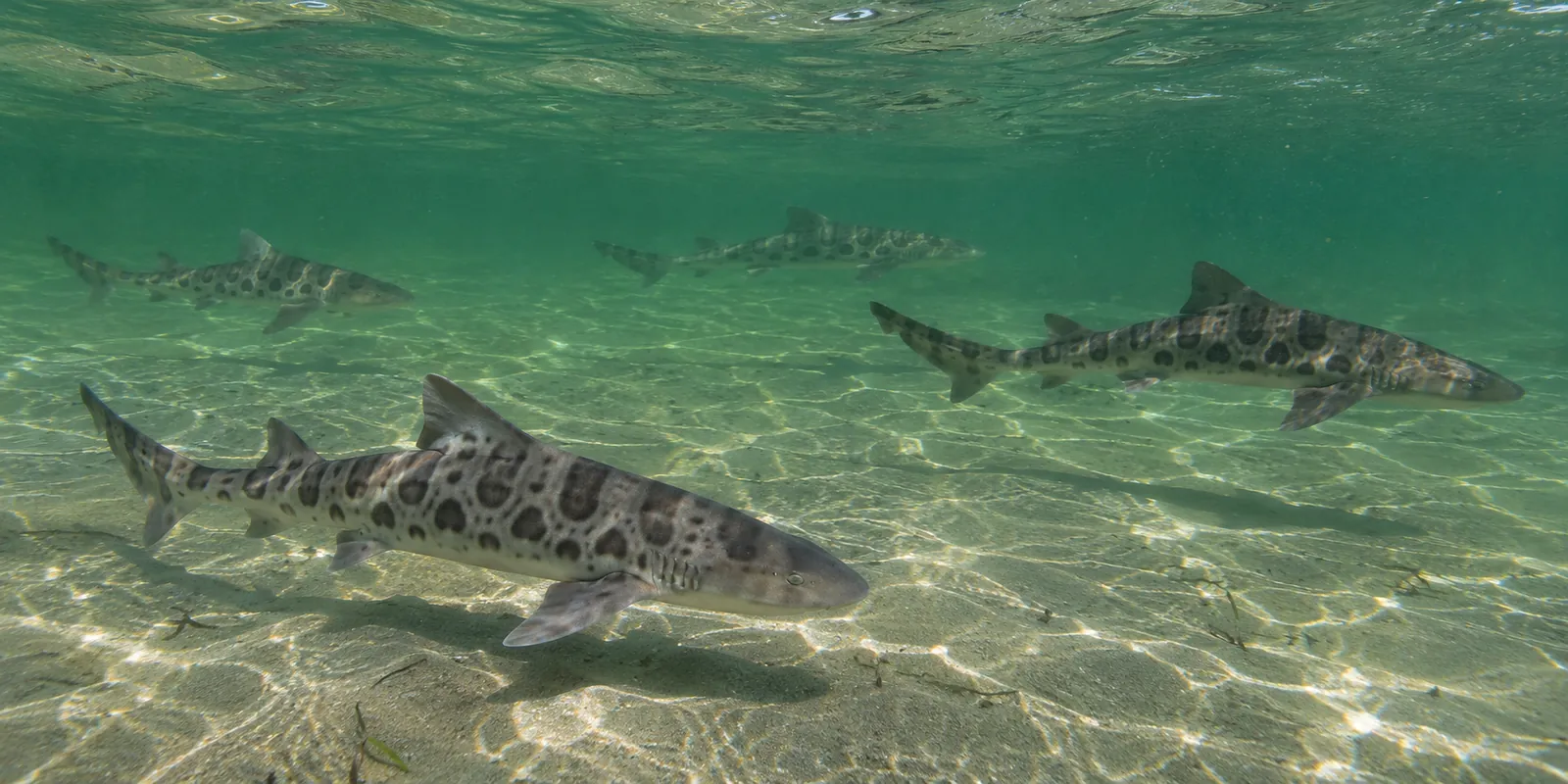
Each summer, leopard sharks gather in the warm shallows off La Jolla Shores. They are harmless to people and are seen in waist-deep to shallow water, often near the beach. Most sightings come between about June and October, with the peak usually in August and September, though it depends on water temperature. Snorkeling is often better than scuba for seeing them, since the sharks stay very shallow. Watch from a respectful distance: touching or chasing them is not allowed.
Reserve rules
Much of the water off La Jolla Shores and the Cove is part of the Matlahuayl State Marine Reserve. In a marine reserve you may not take, damage or disturb any marine life, shells, rocks or other resources. That means no lobster hunting, no spearfishing and no collecting. Our guide to diving California's marine protected areas explains how reserves differ from conservation areas.
What to wear
San Diego water ranges from the high 50s Fahrenheit in winter to around 70 in late summer at the surface, with cooler water below the thermocline. A 7 mm wetsuit with a hood works for most of the year; some divers switch to a 5 mm in late summer.
Eat and stay nearby
La Jolla Shores and La Jolla Village have plenty of casual places to eat after a dive. See our guide to restaurants near California dive sites for what to look for, and our California dive travel guide for combining La Jolla with San Diego's wreck dives.