Monterey Shore Diving: San Carlos Beach, Lovers Point and More
Monterey shore diving is how many West Coast divers learn to love cold water. Monterey Bay's kelp forests start a short swim from the beach, the sites are close together, and on a calm day you can make several dives without ever stepping on a boat.
San Carlos Beach (the Breakwater)
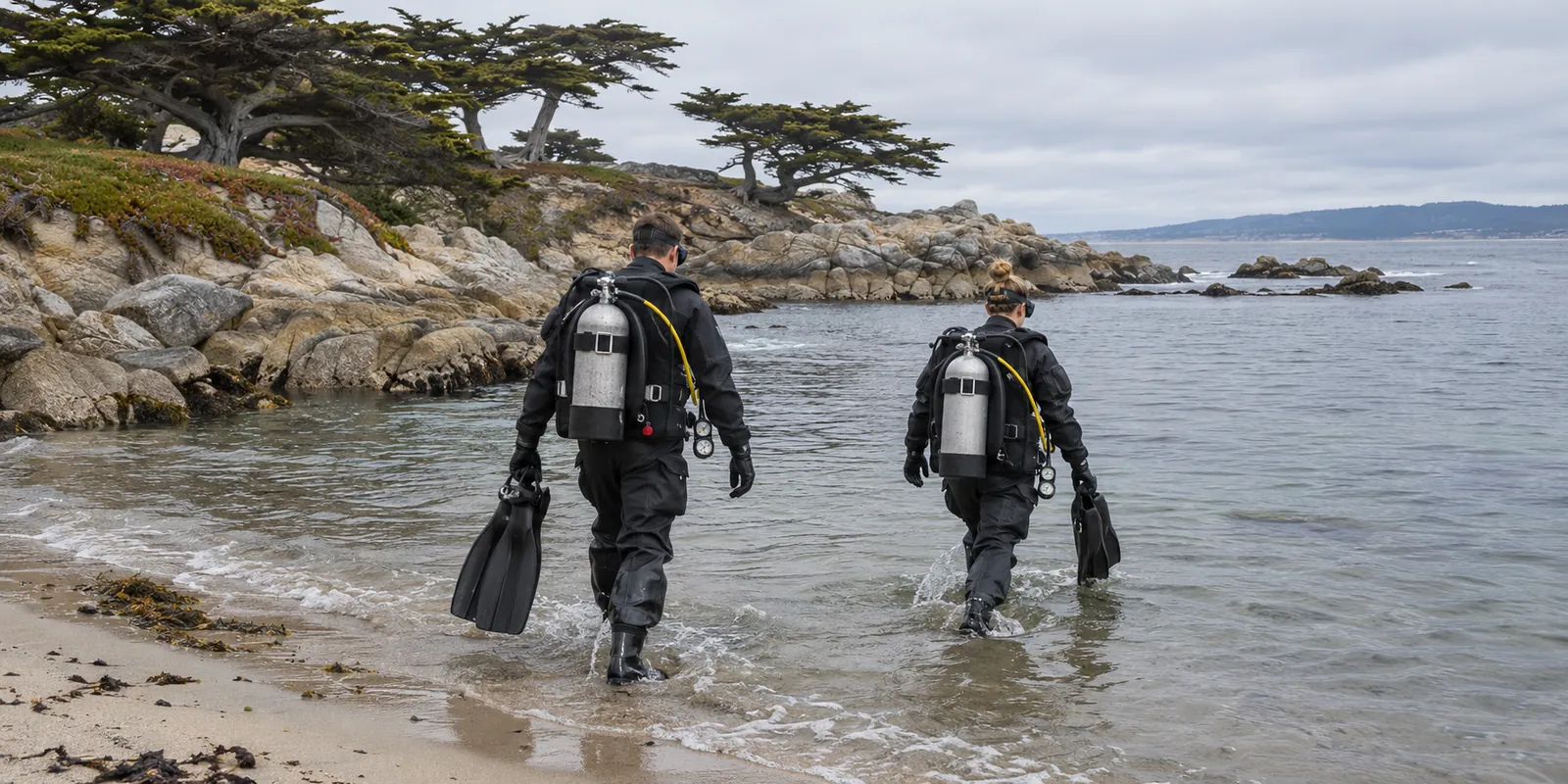
San Carlos Beach, next to the Coast Guard breakwater in Monterey, is the area's most popular training site. A grassy park leads down to a small sandy beach with a gentle slope into the bay, and the breakwater shelters it from most swell. Divers swim out along the breakwater wall, where the rocks are covered with anemones and home to sea lions on the surface and fish below, or head out over sand and kelp toward deeper water.
Because the site is so popular, expect classes and groups on weekends. Parking near the beach is metered and fills early, so arrive in the morning. Rinse stations and restrooms near the park make it an easy place to spend a day.
Lovers Point
Lovers Point in Pacific Grove has a sheltered sandy cove with steps down to the beach and kelp beds just offshore. The rocky reef on either side of the cove is full of life. The waters here are part of the Lovers Point to Julia Platt State Marine Reserve, so nothing may be taken: it is a place to look and photograph, not to hunt.
Monastery Beach
Monastery Beach in Carmel offers some of the most dramatic shore diving in the area, with kelp and a deep canyon close to shore. It also has a steep beach and a powerful shore break that has caused serious accidents. Dive Monastery only with local experience, on a calm day, and skip it entirely when there is surf.
More sites nearby
Other shore sites around Monterey and Pacific Grove include McAbee Beach on Cannery Row and the reefs off Otter Point. Just to the south, Point Lobos is one of the most beautiful dives in the state and needs a reservation.
Best tides and conditions
Swell matters more than tide at most Monterey sites, so check the surf forecast first. Smaller swell means easier entries and better visibility. A higher tide can make the swim over shallow rocks easier at some beaches, while slack water around tide changes reduces surge. Spring and early summer often bring upwelling, which cools the water and feeds plankton blooms that reduce visibility; fall is often the calmest and clearest season.
Drysuit or wetsuit?
Monterey water is cold all year, usually in the low to mid 50s Fahrenheit, a little warmer in fall. Many local divers wear drysuits for comfort and longer dives, while visitors often use a 7 mm wetsuit with a hood, gloves and boots. Our scuba diving gear guide for California divers explains the essentials, and our post on 7mm wetsuits vs drysuits goes deeper into the choice.
Where to stay
Monterey and Pacific Grove have plenty of places to stay within a few minutes' drive of the beaches. See our California dive accommodations guide for tips on choosing a room with space to rinse and dry gear.